 |
|
 |
|
 |
|||||||
 |
|||||||
John Gray set out to prove that humans are no different from other animals by writing a book on the topic. If that irony isn't enough to convince you that Gray is a moron, keep reading.
The first chapter of Straw Dogs is so peppered with error that I stopped reading the book. Gray does enunciate a few important ideas in his first chapter, but that’s an unacceptably low signal-to-noise ratio.
Smart Ideas Here are Gray’s two good observations in his first chapter.
Irrational Scientific Progress: Science isn’t an entirely rational undertaking. Scientific breakthroughs happen when innovative thinkers violate accepted rationality. Some of it is an experimental leap of logic, like “What if the moon were a big, round rock free falling toward earth?” Darwin’s theory of evolution, for example, had real problems squaring with the 19th century theory of heredity by “blood.”
“Humankind” vs. Humans: “Humankind” doesn’t have a fate or a destiny. There is no such thing as “humankind,” and the liberal humanist concept of humankind is a vestige of Europe’s Christian heritage. There’s no humankind, there are only humans. If people populate the stars or genetically retrofit successive generations, that will be the fate of some small population of humans, not of “humanity.”
Bad Ideas These are just the worst; there's more.
Galileo: Gray says Galileo’s cosmology won out not because science is rational but because Galileo was a superior intellectual politician. Here, Gray demonstrates a fundamental break from reality. How can you credit anything he says after a statement such as that one? Since Gray is promoting the Gaia hypothesis, which is rejected by mainstream science, he needs to undermine the authority of mainstream science. But saying that heliocentrism won out over geocentrism because of political manipulation is too much. To explain Galileo's breakthrough without once mentioning the telescope, well, it boggles.
Scientific Method: Gray says that not only scientific innovations but also scientific work in general is irrational. Here he goes too far. Darwin’s insight might have been poetic, but the work that scientists have done to test, confirm, and use the theory has been rational and verifiable.
Daisyworld: Gray says that a simple computer simulation called “Daisyworld” shows that “the Gaia hypothesis is consistent with the narrowest scientific orthodoxy.” It takes a lot more than a simple computer simulation to demonstrate any such thing. Daisyworld is a virtual world of black, cold-loving daisies and white, heat-loving daisies. Such a planet regulates its heat to keep it within the livable range. But there’s also “Iceworld,” where a drop in temperature leads to more ice which leads to more sunlight reflected back into space and a drop in temperature. The result: snowballing ice age, the so-called “snowball earth.”
Next I tried to get my money back, but I'd already written margin notes. I'd give the book away, but there's no one I dislike enough to give it to. Should I just throw the book out, or is there some portion of the remaining text that's worth reading? Anybody know?
—JoT
top |
|||||||
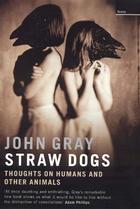
Is this the last time I'm going to buy a bad book because there's naked people on the cover? Alas, probably not. |
|||||||
|
|
|
|
|
|
|
|